Running on FPGA · GDS ready
eFPGA fabric
Hercoss's own programmable logic fabric: the reconfigurable part of the Exxo A1, already running and taken to physical layout.
- Runtime reconfiguration
- IHP SG13G2
- IHP precheck: clean
- Open-source flow
What it is
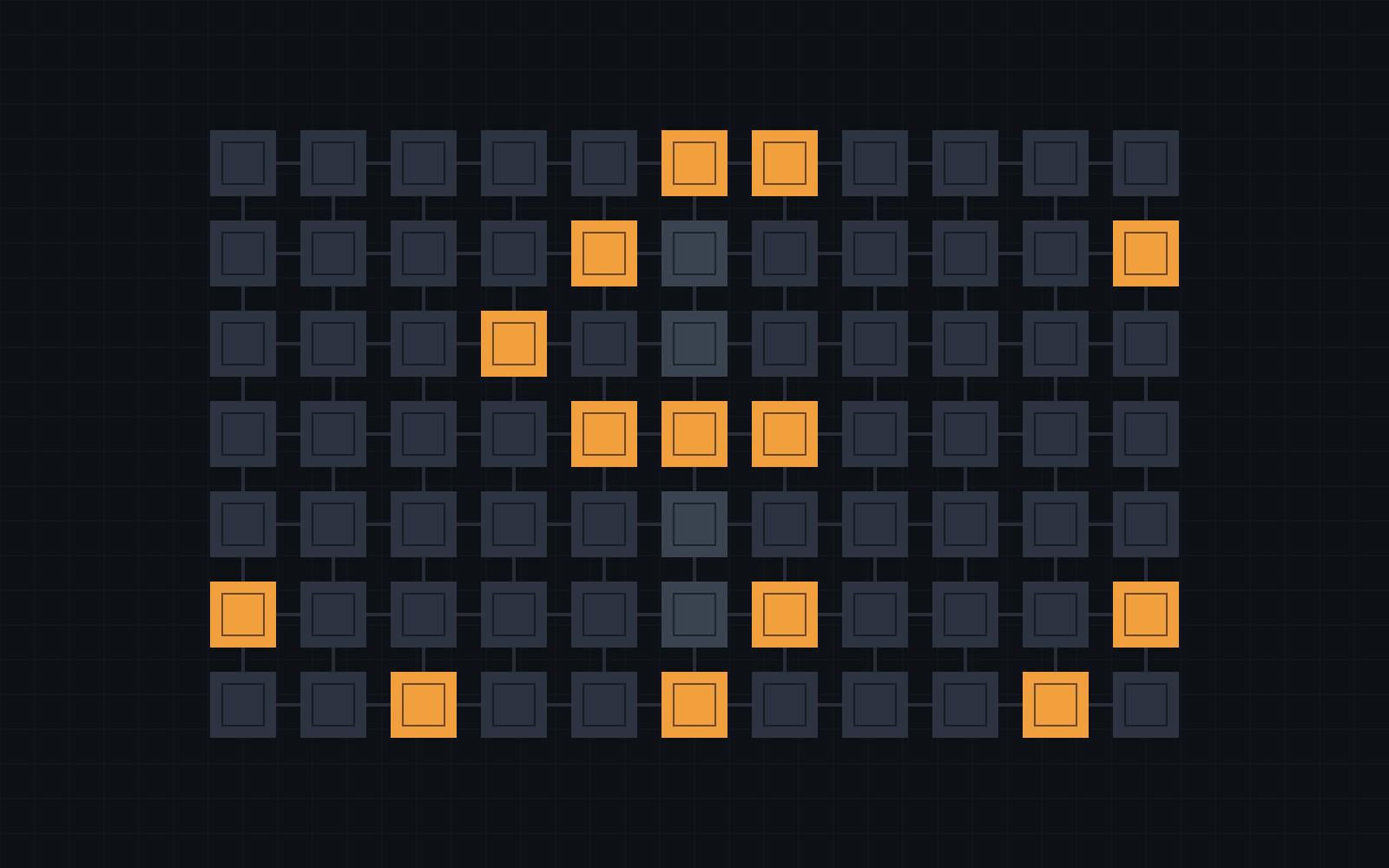
An FPGA is made of thousands of small identical logic cells joined by programmable wiring. That grid of cells and wires is the fabric. An eFPGA (“embedded FPGA”) is a fabric designed to be placed inside another chip rather than sold as a chip of its own.
Hercoss designs its own fabric instead of licensing one. That is what lets the Exxo A1 include reconfigurable logic without depending on an FPGA vendor.
What has been achieved
It runs. The first version of the fabric, efpga_v0, was loaded into a
commercial AMD Versal FPGA and run at 25 MHz. It passed a runtime
reconfiguration self-test over JTAG: the fabric was reprogrammed while
running and behaved correctly each time.
It has a physical layout. The same fabric was then taken all the way to GDS, the file format a foundry manufactures from, in IHP’s SG13G2 process, a 130 nm technology made in Germany. The result passes IHP’s official precheck with zero errors: LVS, antenna and timing are clean, and the GDS is ready for submission.
Why emulate an FPGA inside another FPGA?
Fabricating a chip takes months and cannot be undone. Running the fabric inside a commercial FPGA first proves the logic, the configuration chain and the software tools on real hardware in days, before any silicon is ordered.
What do LVS, antenna and timing mean?
They are the checks a layout must pass before a foundry accepts it. LVS confirms the drawn layout matches the intended circuit. Antenna rules protect transistors from damage during manufacturing. Timing confirms signals arrive in time at the target clock speed.
Which tools were used?
An open-source flow: the FABulous framework generates the fabric and LibreLane takes it to layout on the open IHP SG13G2 process design kit.
What comes next
A timing model of the fabric as a reusable macro, integration with the processor, and recovering area in the DSP column.